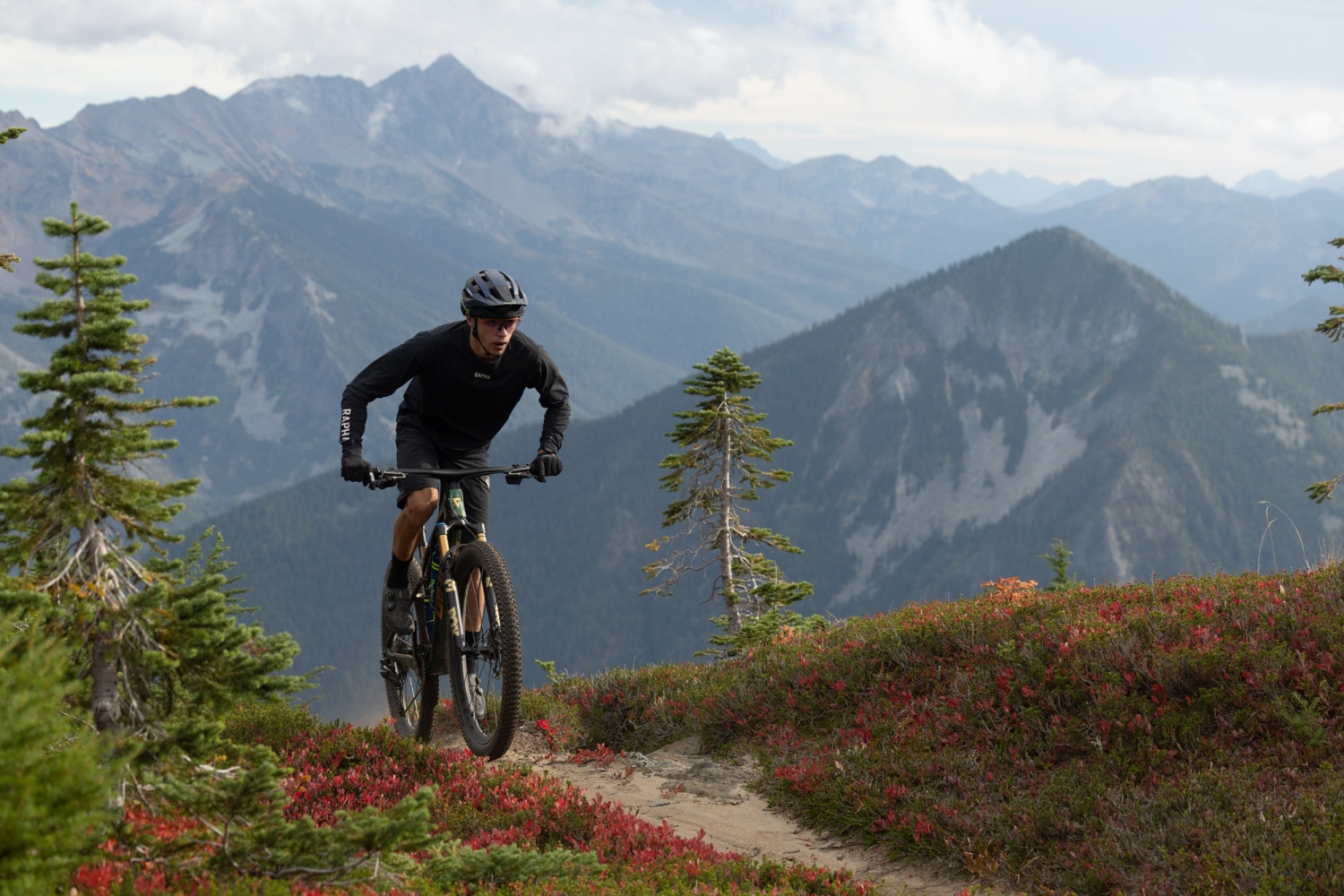
Whether you’ve been inspired by professional riders showcasing their skills on social media, want to keep fit, or are transitioning from summer road cycling, mountain biking is a great way to explore the outdoors and have some fun.
So if you’re new to mountain biking and want to understand the differences between each category, what makes them unique compared to other types of cycling, and where the Giant and Liv models fit into the range, this guide is for you. Whether you’re looking at a traditional mountain bike or an electric mountain bike (e-MTB), the fundamentals remain the same. For a closer look at electric bikes and how they work, keep an eye out for our upcoming guide.
Suspension
Suspension is one of the most important features of a mountain bike. It helps absorb bumps and imperfections in the trail, improving comfort, grip and control. The amount of suspension a bike has also influences the type of terrain it can handle.
However, more (longer) suspension travel doesn’t necessarily mean a better bike. Longer-travel suspension often adds weight and is paired with geometry designed for more aggressive terrain. Choosing a bike with too much suspension for your needs can leave you with something heavier and less nimble than necessary, taking some of the fun out of your ride.
Hardtail (front suspension only)
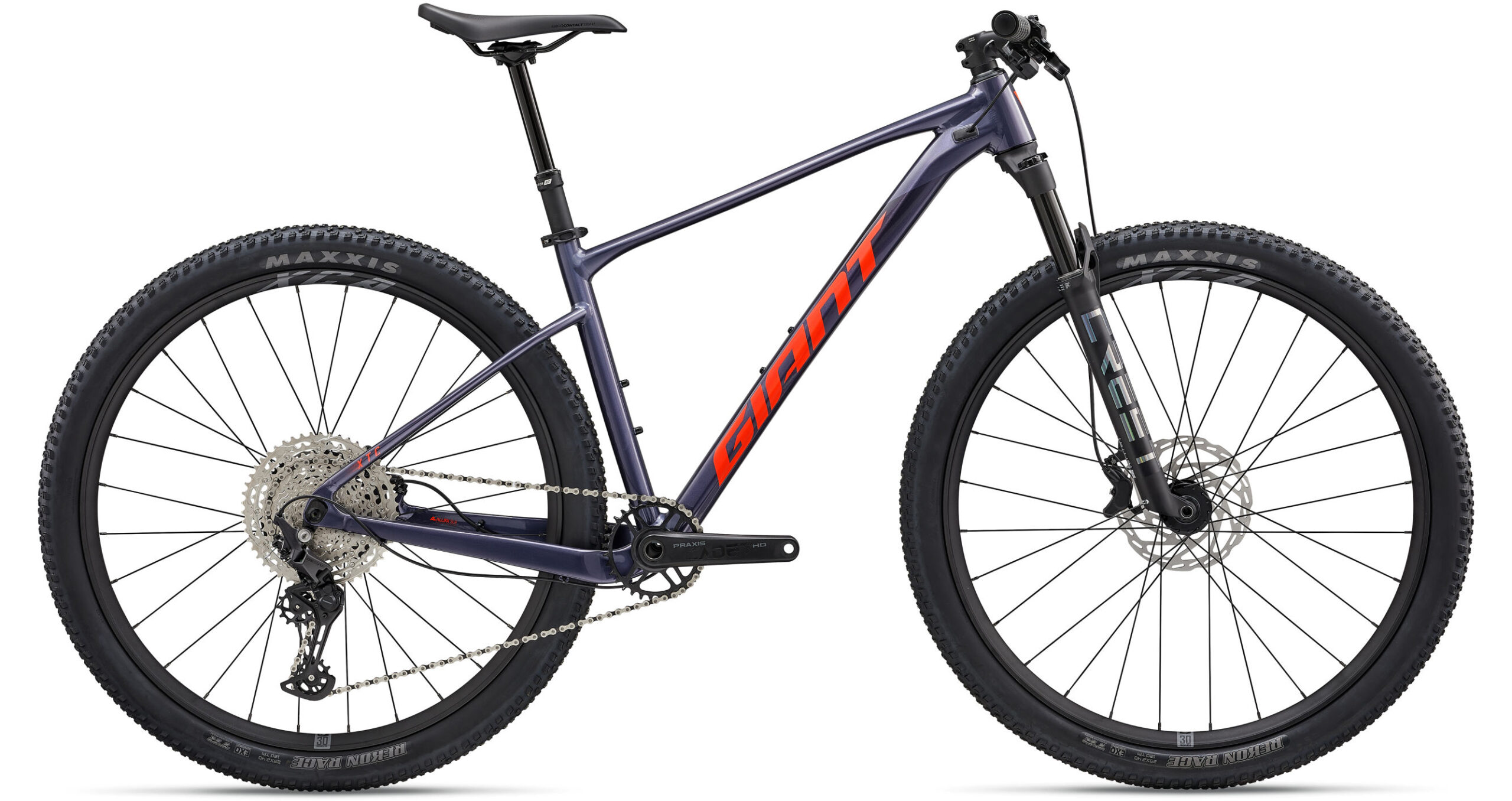
Hardtails are simpler, generally more affordable and often cheaper to maintain than full-suspension bikes. They’re a great choice for beginners, offering an accessible entry point into mountain biking while helping riders develop good technique. Without rear suspension, they can require more skill to navigate technical terrain comfortably.
Many experienced riders also choose hardtails for their simplicity, lower maintenance requirements and ease of cleaning, making them a popular option for winter riding.
Full suspension / Dual Suspension (front and rear suspension)
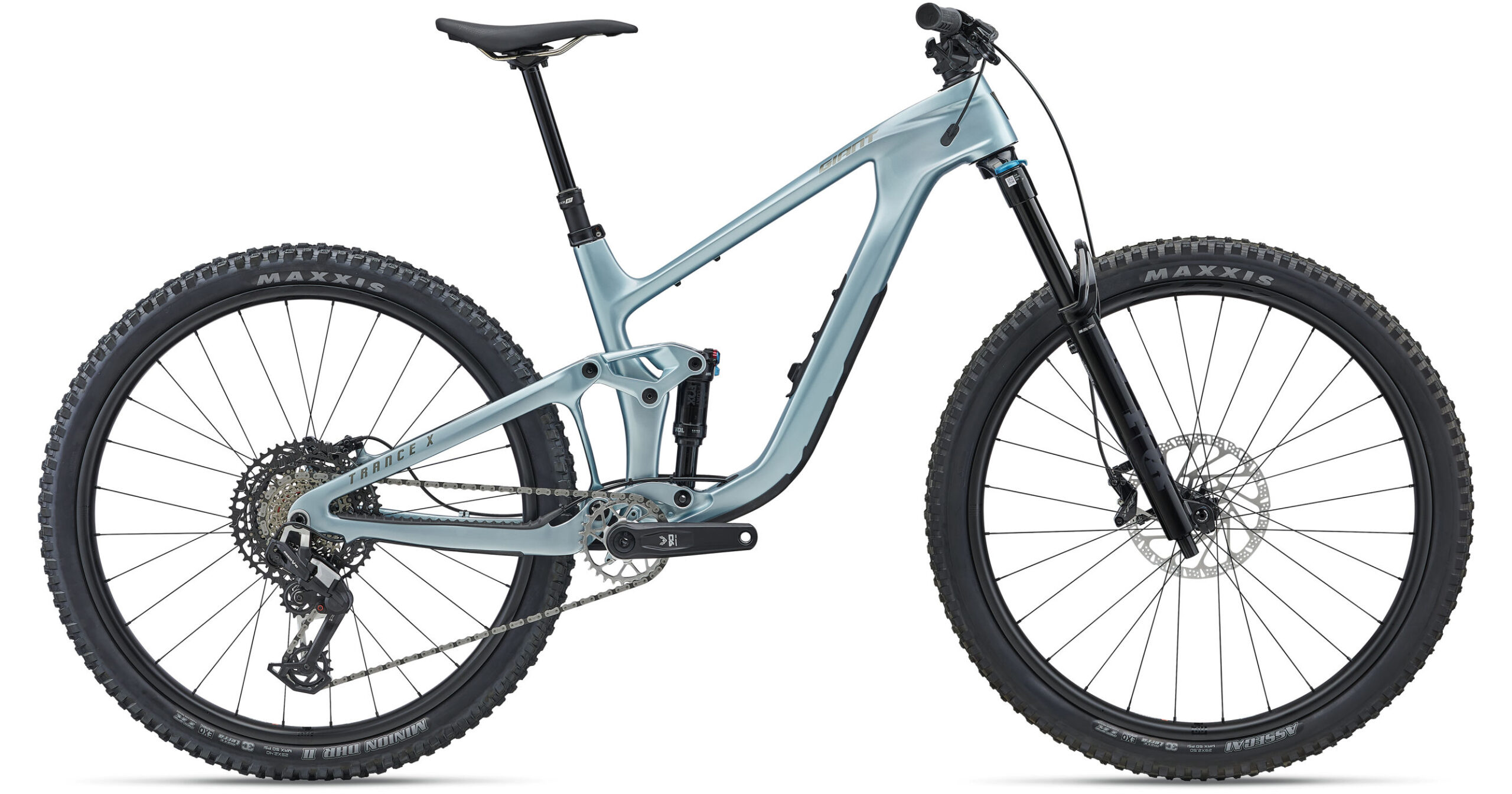
Full-suspension bikes are a popular choice for riders tackling more demanding trails or prioritising comfort and control. The front and rear suspension work together to absorb bumps, helping the tyres maintain contact with the ground for improved grip and traction.
Modern hardtails are capable of handling surprisingly challenging terrain, but full-suspension bikes generally offer greater comfort and control when riding over rough, technical trails.
Geometry
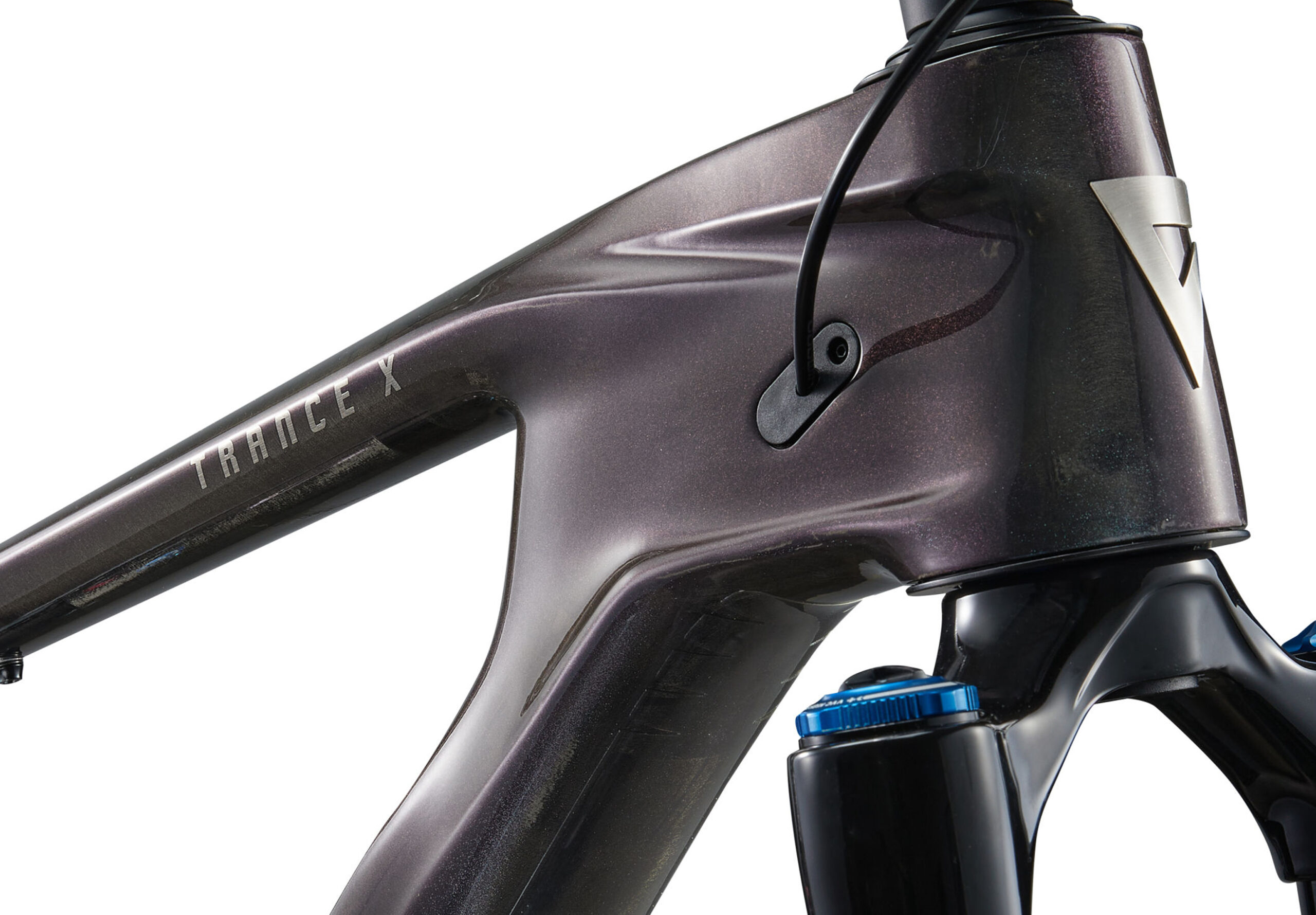
A mountain bike’s geometry refers to the angles and measurements of its frame, which have a big impact on how it handles and performs on the trail.
For example, a slacker head angle (head tube shown in image above) generally provides greater stability and control on steep descents, while a steeper head angle can make the bike feel more responsive and efficient, particularly when climbing.
Other important measurements include the height of the bottom bracket, which houses the bearings that allow the cranks to rotate. A higher bottom bracket provides more clearance over rocks and other obstacles, while a lower bottom bracket lowers the rider’s centre of gravity, helping improve stability when cornering.
Some Giant and Liv mountain bikes feature adjustable geometry, allowing riders to fine-tune the bike to suit their preferences and the terrain they ride. These adjustments can affect multiple aspects of the bike’s handling at once. For example, slackening the head angle may also lower the bottom bracket, depending on the adjustment system.
Mountain Bike Categories
Mountain bikes are designed for different types of terrain and riding styles. While many categories overlap, choosing the right type of bike can make a significant difference to your experience. The wrong bike might make challenging trails harder than necessary, or leave you pedalling a heavier bike than you need on easier routes.
There are several mountain bike categories, but we’ll focus on the most common disciplines and explain what each is designed for.
Entry-Level
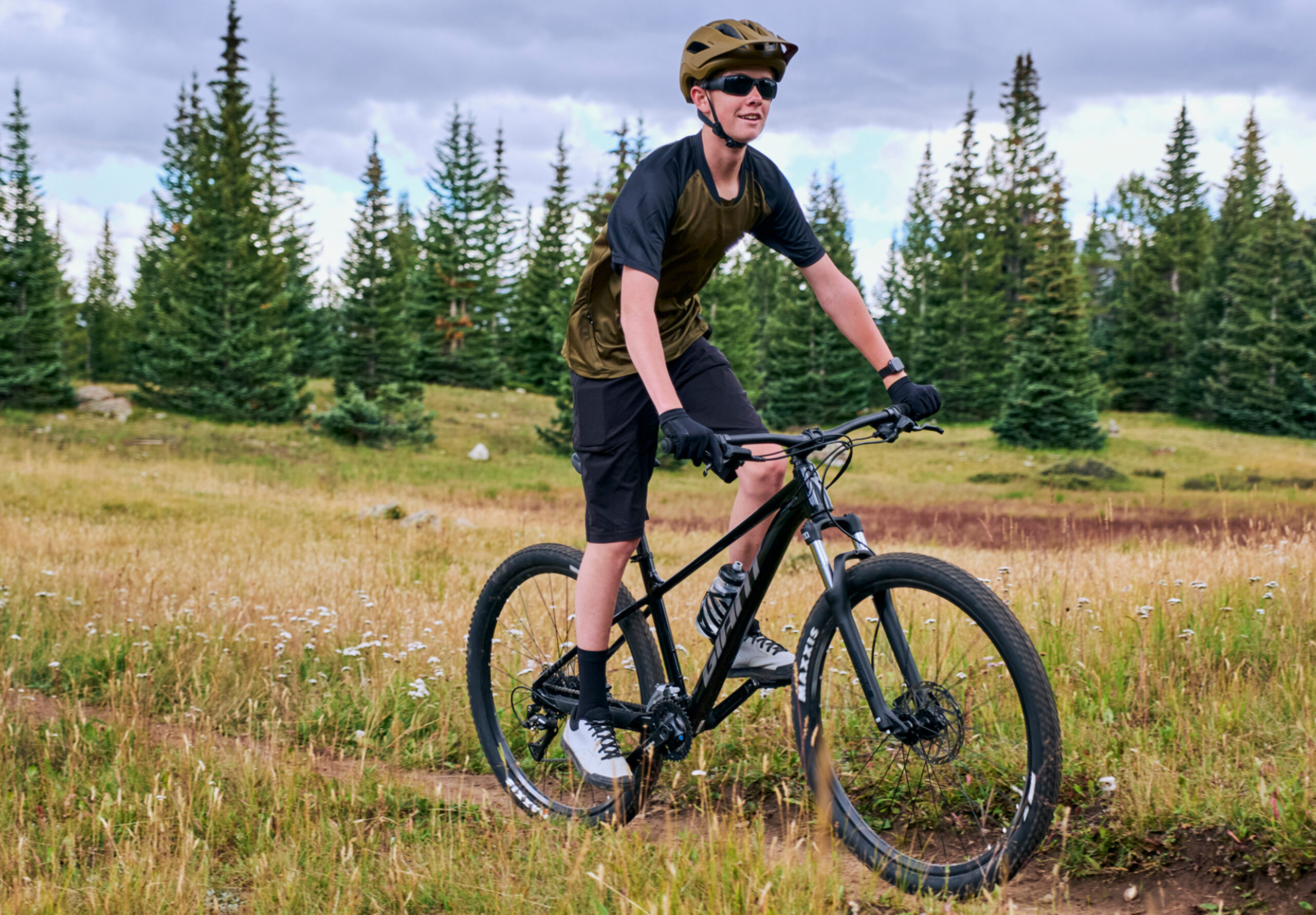
Typical suspension travel 100mm-120mm
Models:
Giant Talon
Liv Tempt (Womens)
Entry-level mountain bikes can be difficult to place into a single category, as they combine features from several disciplines to create a versatile, beginner-friendly package.
Typically featuring around 100mm of suspension travel, these bikes offer a great balance of capability and everyday usability. They’re practical enough for commuting to school or work during the week, while still being capable of tackling trails at the weekend.
The geometry is designed to inspire confidence, with a longer wheelbase to improve stability and a balanced head angle that provides a good mix of control and pedalling efficiency. This makes entry-level mountain bikes an excellent choice for developing your technique, building confidence and discovering which type of mountain biking you enjoy most, without making a large initial investment.
Best for:
- Beginner mountain bikers looking to build their skills.
- Budget-conscious riders looking for great value.
- Riders who want to explore different trails and discover their preferred mountain biking discipline.
Consider another category if: You’re a more experienced rider looking for higher-spec components and a bike better suited to frequent, more technical riding.
Cross Country (XC)
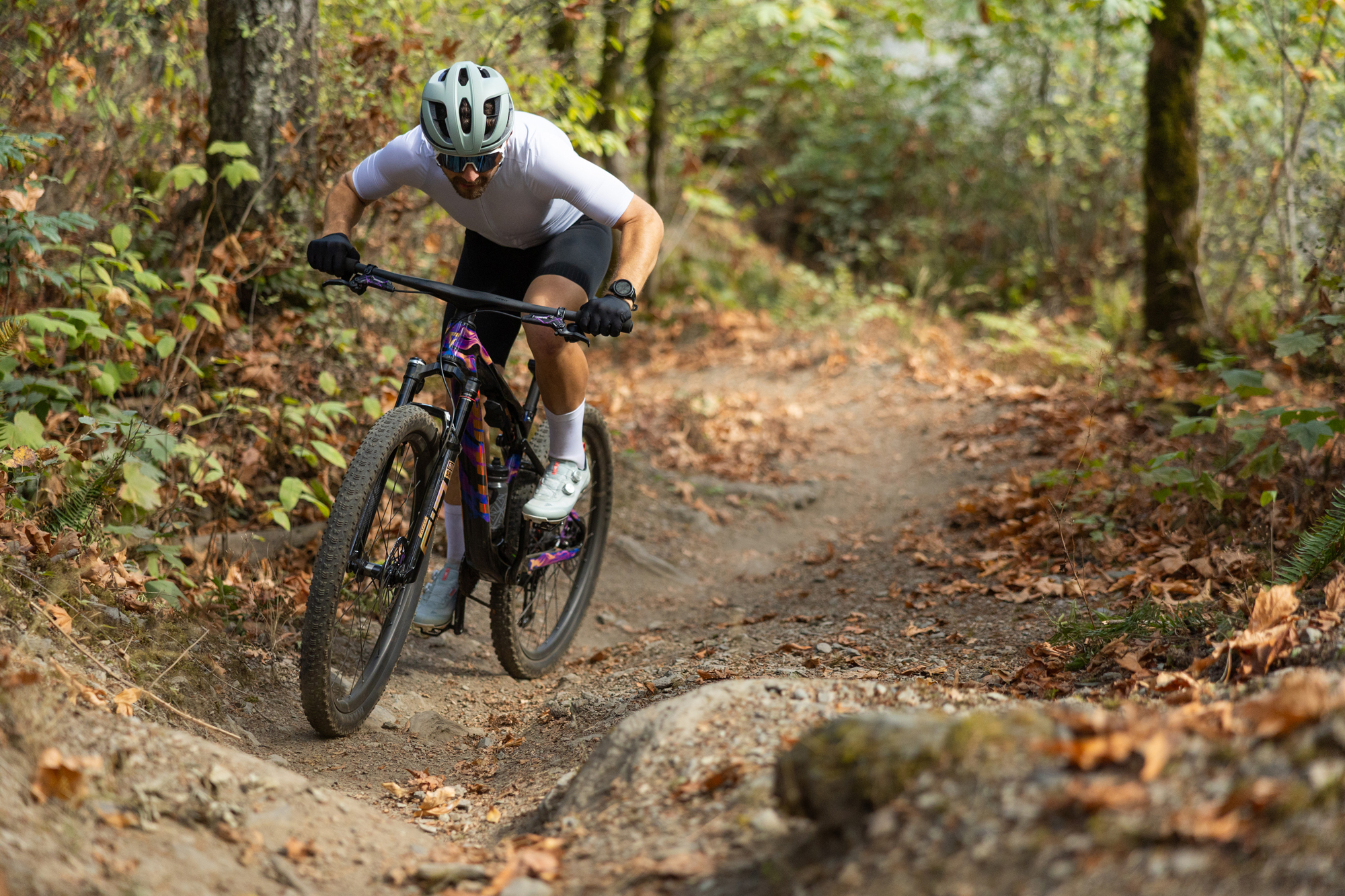
Typical suspension travel: 100mm to 120mm
Models:
Giant Anthem Advanced SL
Giant XTC
Liv Pique Advanced SL (Womens)
Cross-country bikes are designed to be fast and efficient on both climbs and descents. Lightweight frames and components help riders maximise speed and conserve energy, making these bikes ideal for covering ground quickly. They’re generally best suited to less technical trails and are available in both hardtail and full-suspension designs.
Best for:
- Riders looking to maximise speed and efficiency.
- Those who want one of the lightest types of mountain bike.
- Less technical trails and cross-country routes.
- Road cyclists looking for a winter alternative.
Consider another category if: You regularly ride steep, rough and highly technical trails.
Trail / All-Mountain
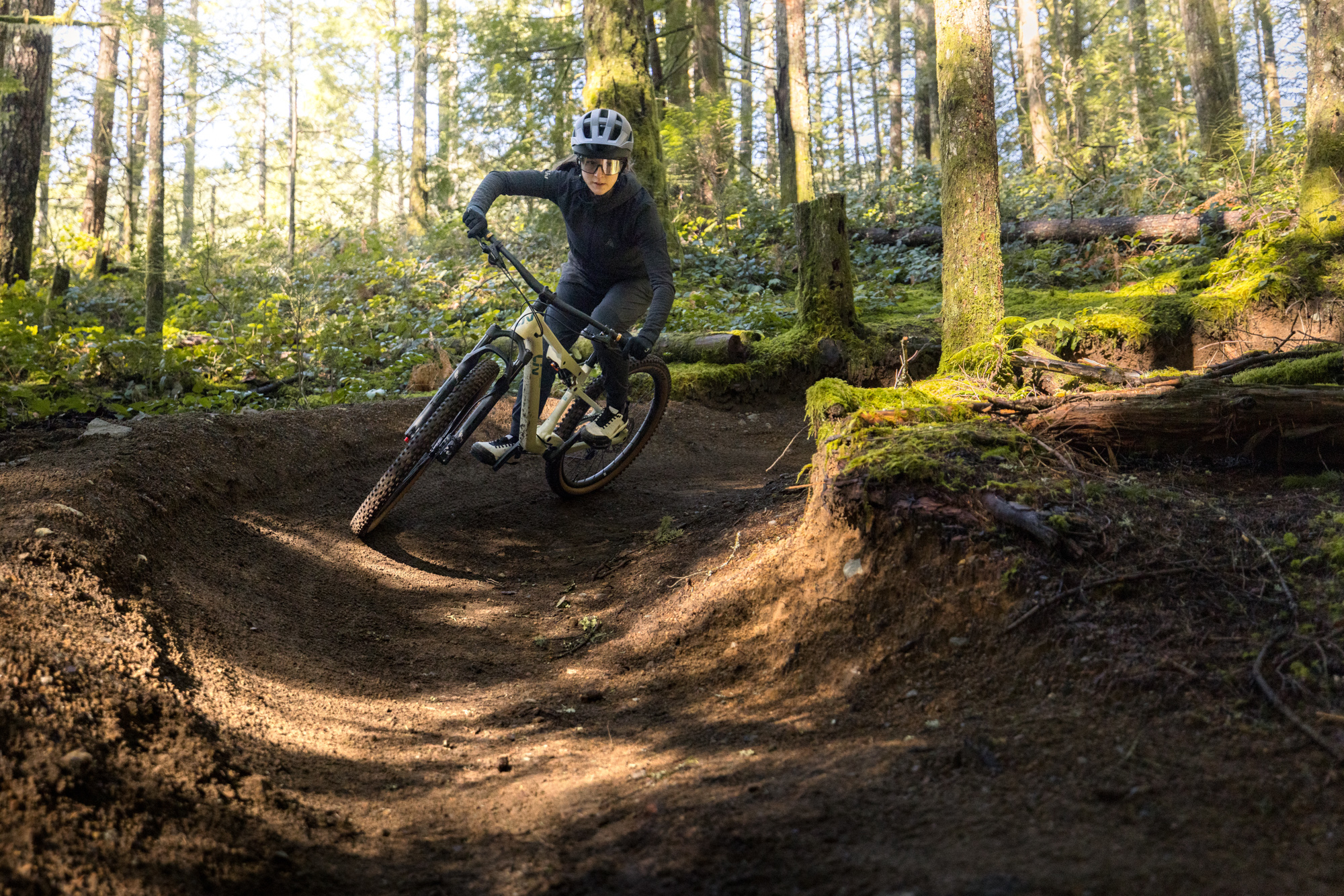
Typical suspension travel: 130mm to 150mm
Models:
Giant Stance
Giant Anthem X Advanced SL
Giant Trance X
Liv Embolden (Womens)
Liv Pique X Advanced SL (Womens)
Liv Intrigue X (Womens)
As the name suggests, trail bikes are designed to handle a bit of everything. They offer a balance of climbing efficiency, descending ability and everyday versatility, making them an excellent choice for riders who want one mountain bike to tackle a wide variety of trails.
Most trail bikes feature full suspension, providing a good balance of comfort, grip and control without the extra weight and travel of more downhill-focused models.
Best for:
- Riders who want a versatile bike for a variety of trails.
- Those who enjoy both climbing and descending.
- Riders looking for a capable all-rounder without going to either extreme.
Consider another category if: You need the lightest possible bike for speed and climbing, or regularly ride the most demanding downhill trails.
Enduro
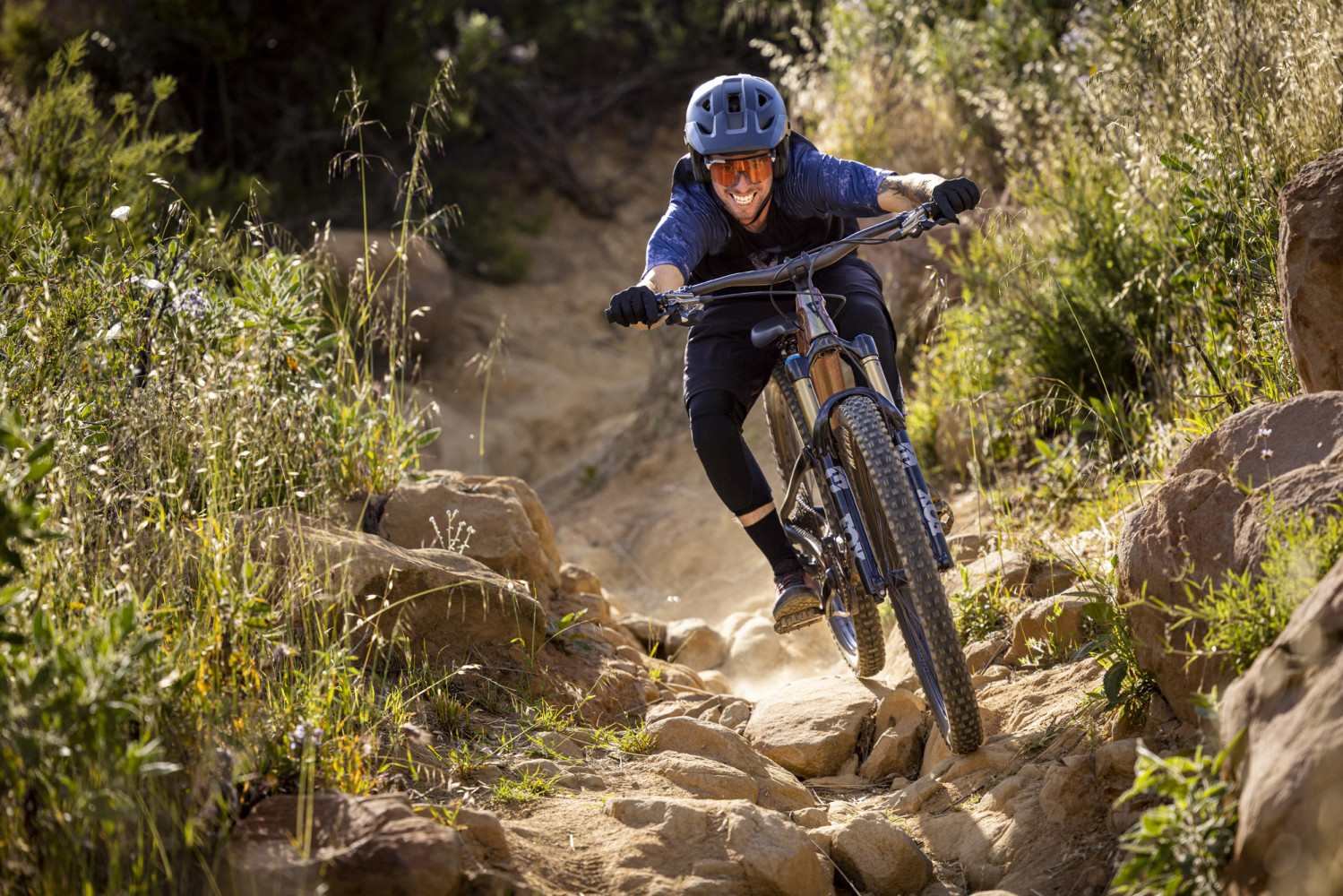
Typical suspension travel: 160mm to 180mm
Models:
Giant Reign
Enduro bikes prioritise descending performance while retaining the ability to pedal back up the mountain. Their geometry and suspension are designed to handle steep, rough and technical trails at speed, making them a great choice for riders who regularly seek out challenging terrain.
They can still climb, but their extra weight and downhill-focused design mean they’re generally less efficient on the way up than XC or trail bikes.
Best for:
- Riders who regularly tackle demanding trails.
- Those who prioritise descending performance.
- Riders who want a capable full suspension mountain bike without relying entirely on uplift services.
Consider another category if: You prioritise lightweight climbing efficiency or mainly ride smoother, less demanding trails.
Downhill (DH)
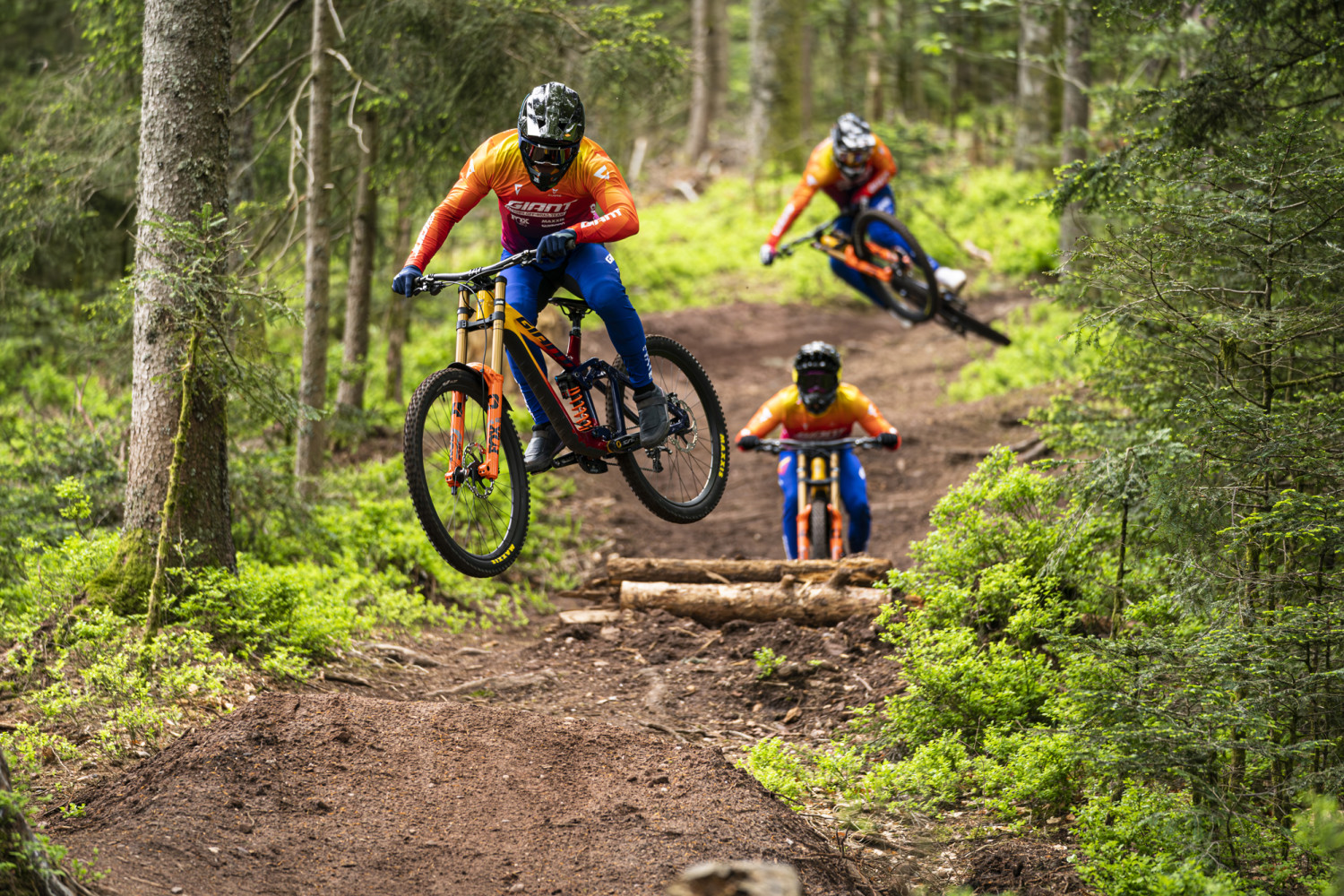
Typical suspension travel: 200mm to 210mm
Models:
Giant Glory Advanced
Downhill bikes are purpose-built for descending. With long-travel suspension, robust components and geometry designed for steep, technical terrain, they can handle big jumps, rough trails and demanding bike park runs.
The trade-off is weight and climbing efficiency. Downhill bikes are designed to be ridden down the mountain, not pedalled back to the top, so most riders use uplift services or lifts to access the trails.
Best for:
- Riders using uplift-assisted venues such as BikePark Wales or bike parks in the Alps.
- Those tackling the biggest jumps and steepest, most technical trails.
- Riders who prioritise downhill performance above all else.
Consider another category if: You need to pedal uphill or cover significant distances between trails and uplift services.
Other Things to Consider
Dropper Seatpost
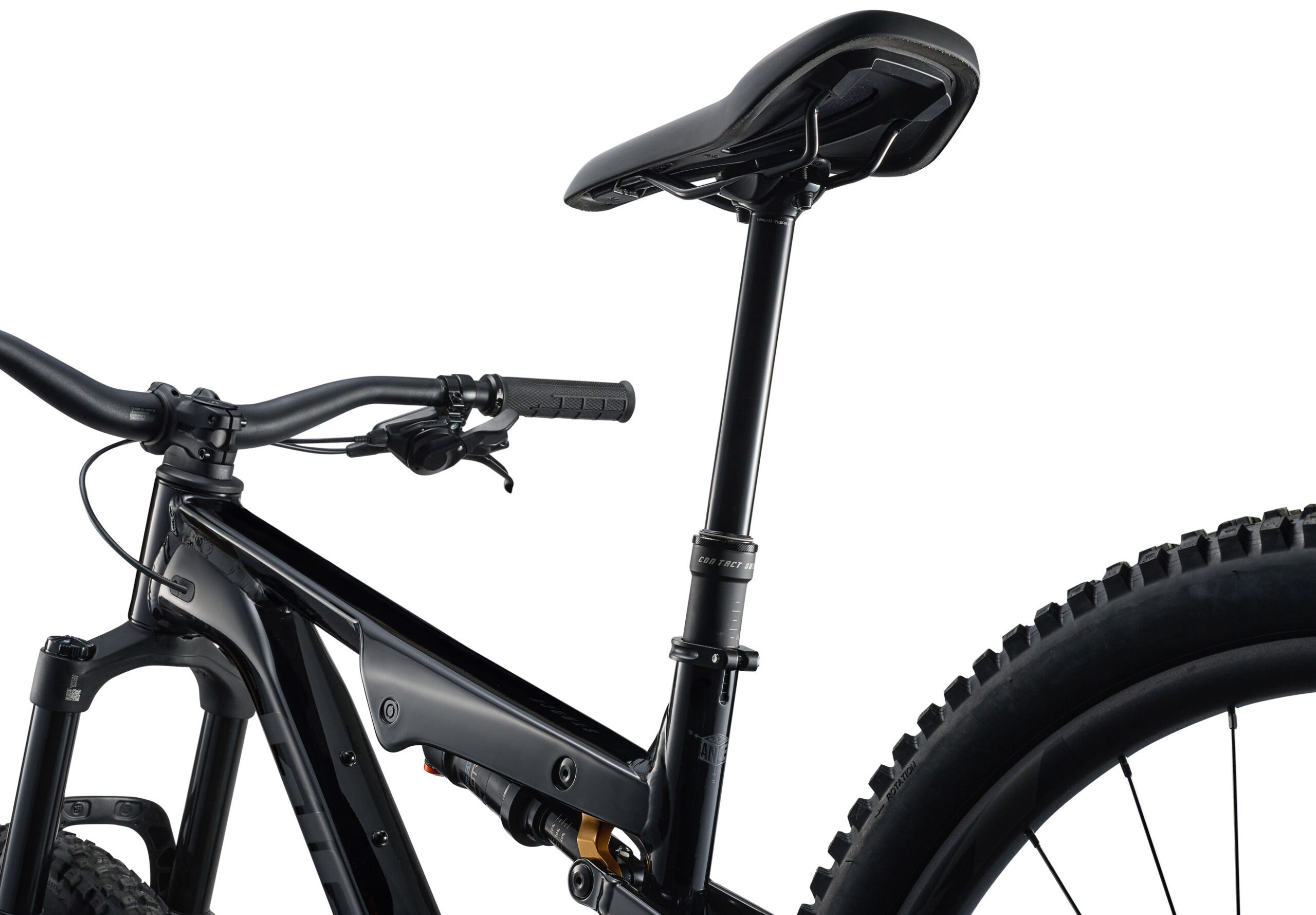
A dropper seatpost is one of the most useful innovations in modern mountain biking. It allows you to lower your saddle at the push of a handlebar-mounted lever, giving you more room to move your body around the bike on steep or technical terrain.
When climbing, you can raise the saddle to your preferred pedalling height. When descending, lowering it helps you move freely and maintain control.
Dropper posts are now available on a wide range of bikes, including some entry-level models priced from around £899. Many use a cable-operated system, making them relatively straightforward to maintain and replace.
1x Drivetrain
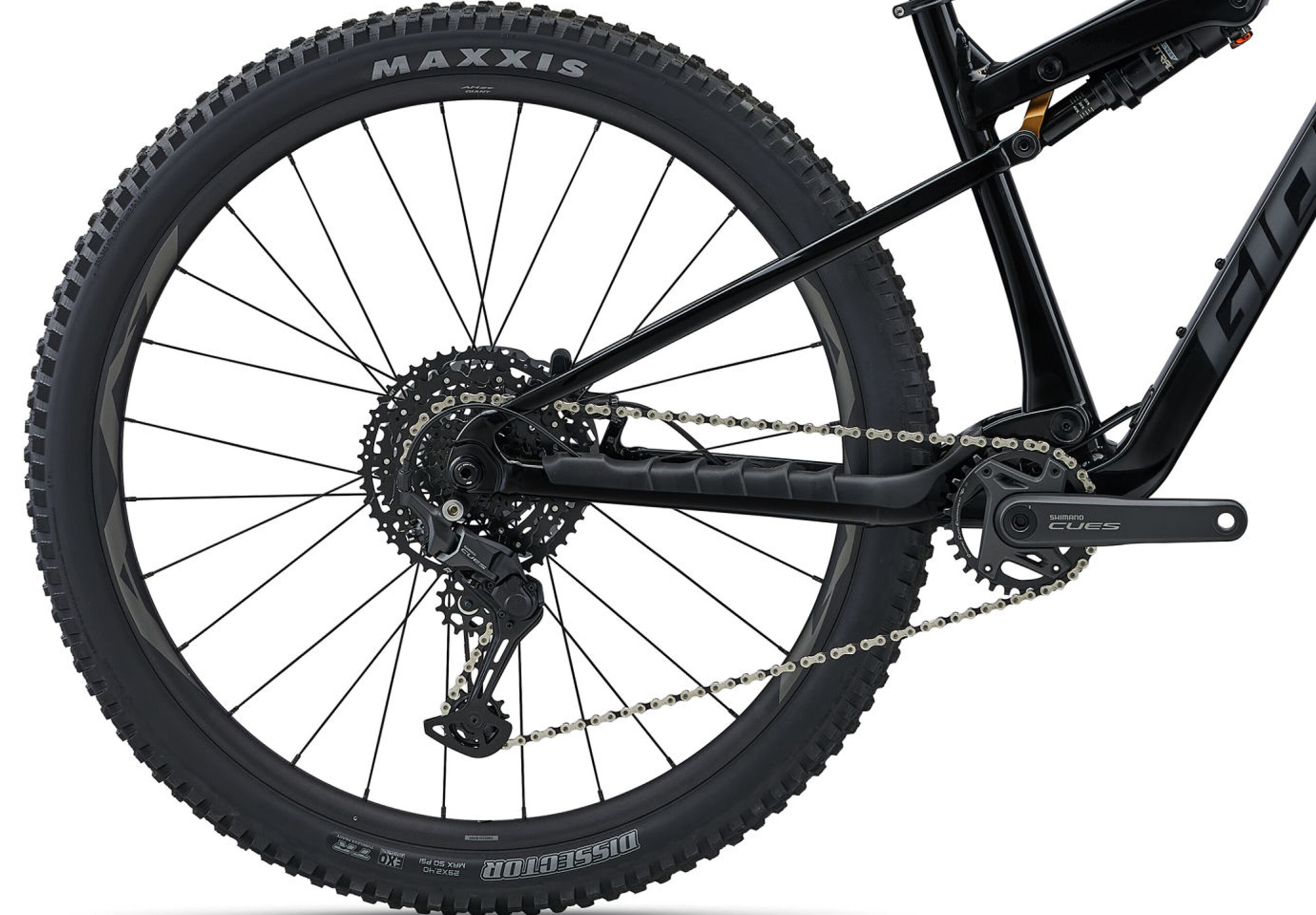
A 1x drivetrain uses a single chainring at the front instead of the two or three found on many traditional gear systems. Although this means fewer individual gears, it doesn’t necessarily mean you’ll have less range.
A wide-range cassette at the rear provides a selection of easier gears for climbing and harder gears for faster riding. A narrow-wide chainring design helps keep the chain in place without the need for a front derailleur.
The result is a lighter, simpler system with fewer moving parts, less gear overlap and fewer components to get clogged with mud. It’s one of the reasons 1x drivetrains have become so popular on modern mountain bikes.
Tyres
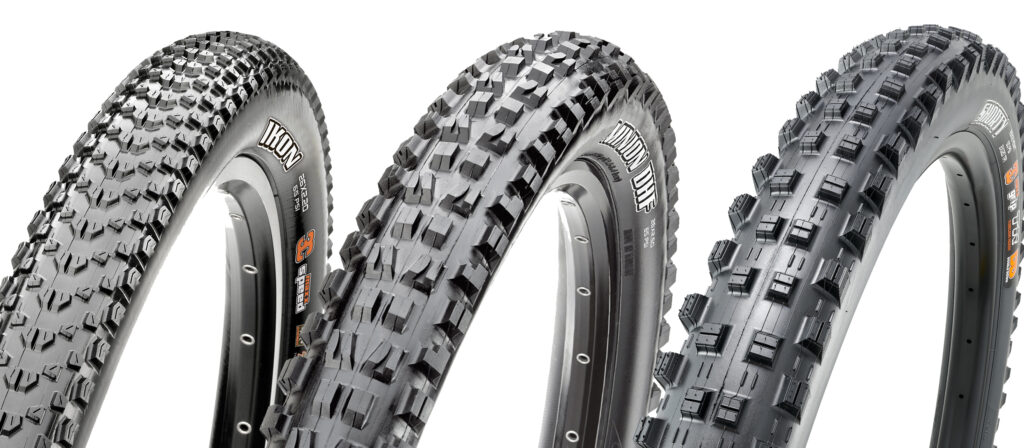
Tyres have a major influence on grip, rolling resistance and overall riding performance. There’s no single tyre that suits every mountain bike, so manufacturers choose tyres to complement the bike’s intended use.
Cross-country tyres generally have a shallower tread pattern to reduce weight and rolling resistance. They’re designed to roll quickly and efficiently, although they may offer less grip on loose or technical terrain.
Enduro/trail tyres typically have deeper, more aggressive tread patterns to provide extra grip and control on steep, rough trails. The trade-off is increased weight and rolling resistance.
Other factors to consider include:
- Width: Wider tyres can offer greater support and traction, although the maximum width is limited by the frame and fork.
- Rubber compound: Softer compounds generally provide more grip but can wear faster and may offer less resistance to cuts and damage.
- Tubeless compatibility: Tubeless setups replace the inner tube with liquid sealant inside the tyre. This can help seal small punctures and allows you to run lower tyre pressures for improved grip and comfort, provided your wheels and tyres are compatible.
Find Your Next Mountain Bike
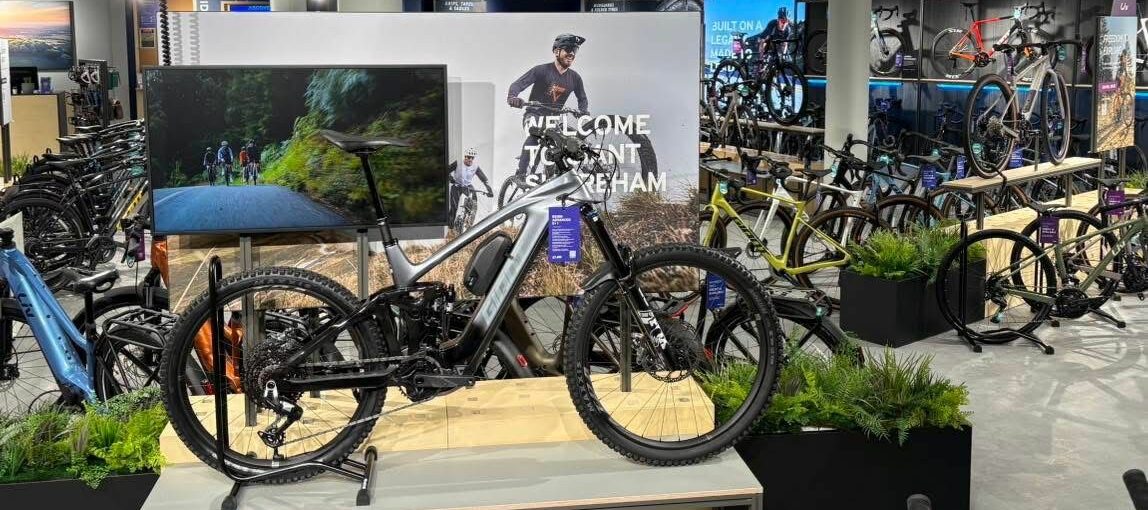
Choosing the right mountain bike comes down to where you ride, the terrain you want to tackle and the type of experience you’re looking for. A lightweight XC bike might be perfect for fast, flowing trails, while a trail or enduro bike could be better suited to rougher, more technical riding.
We always recommend visiting one of our stores for expert advice on bike selection, sizing and fit. If you’re not local to one of our stores, comment below or drop us a message and we’ll be happy to answer any questions and help you find the right Giant or Liv mountain bike for your needs.